
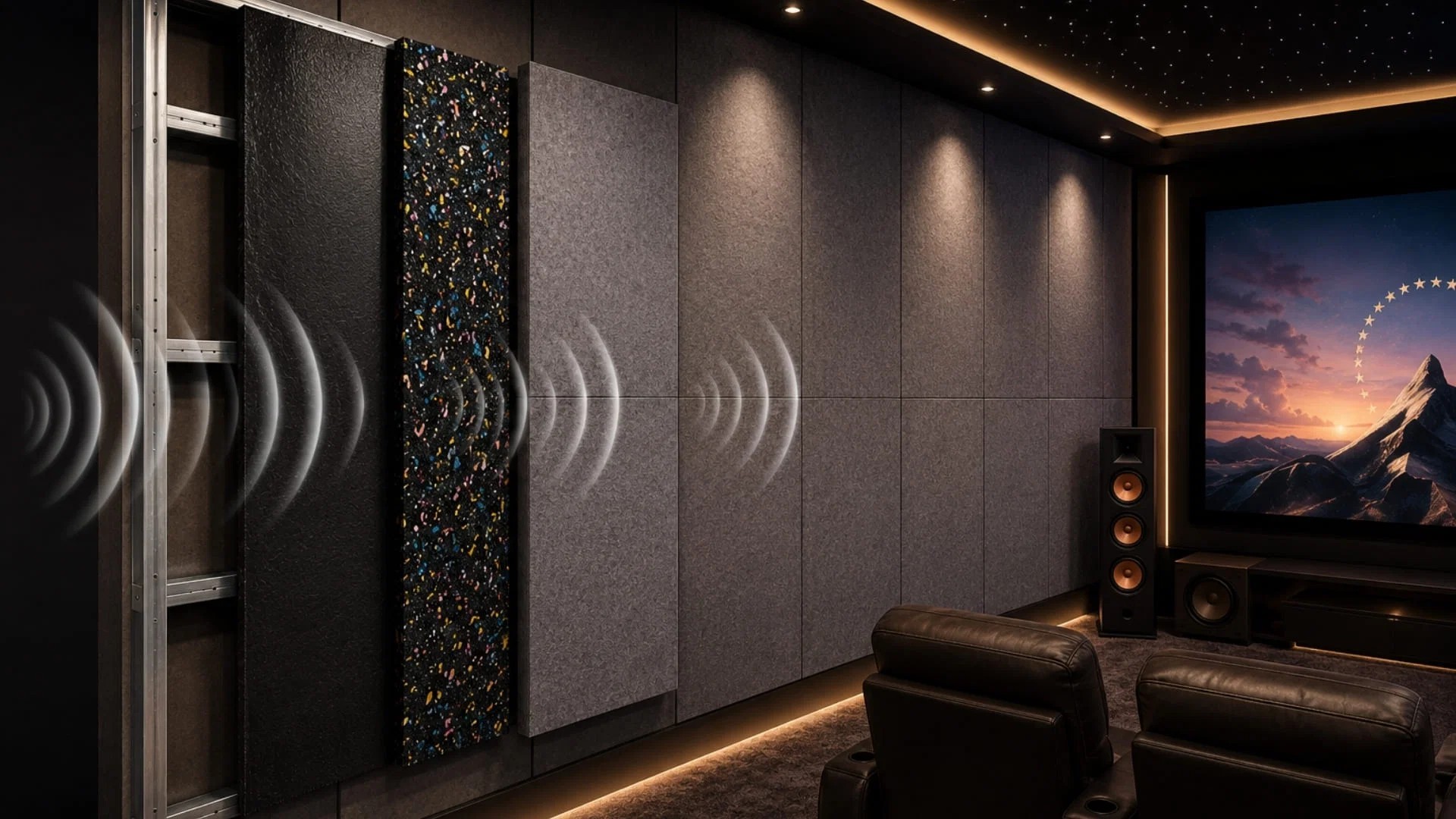
Acoustics and isolation
Interior treatment and isolation between the room and the rest of the house, treated as two separate decisions.
The fear of spending on what you can see and finding out the money belonged to what you cannot.
Isolation stops sound leaving the room. Conditioning makes sound behave inside it. They are two different jobs, with different materials and different costs, and confusing them is the most expensive mistake made in this kind of project.
- ≤ 0.35 s
- Target reverberation time, dedicated room
- 2
- Measurement campaigns, before and after
- < 30 min
- Distance to the acoustic treatment factory
We measure before we buy
Before any material decision we survey proportions, calculate the room’s modes and identify where pressure builds. A well-proportioned room needs less treatment, and that changes the budget before it changes the sound.
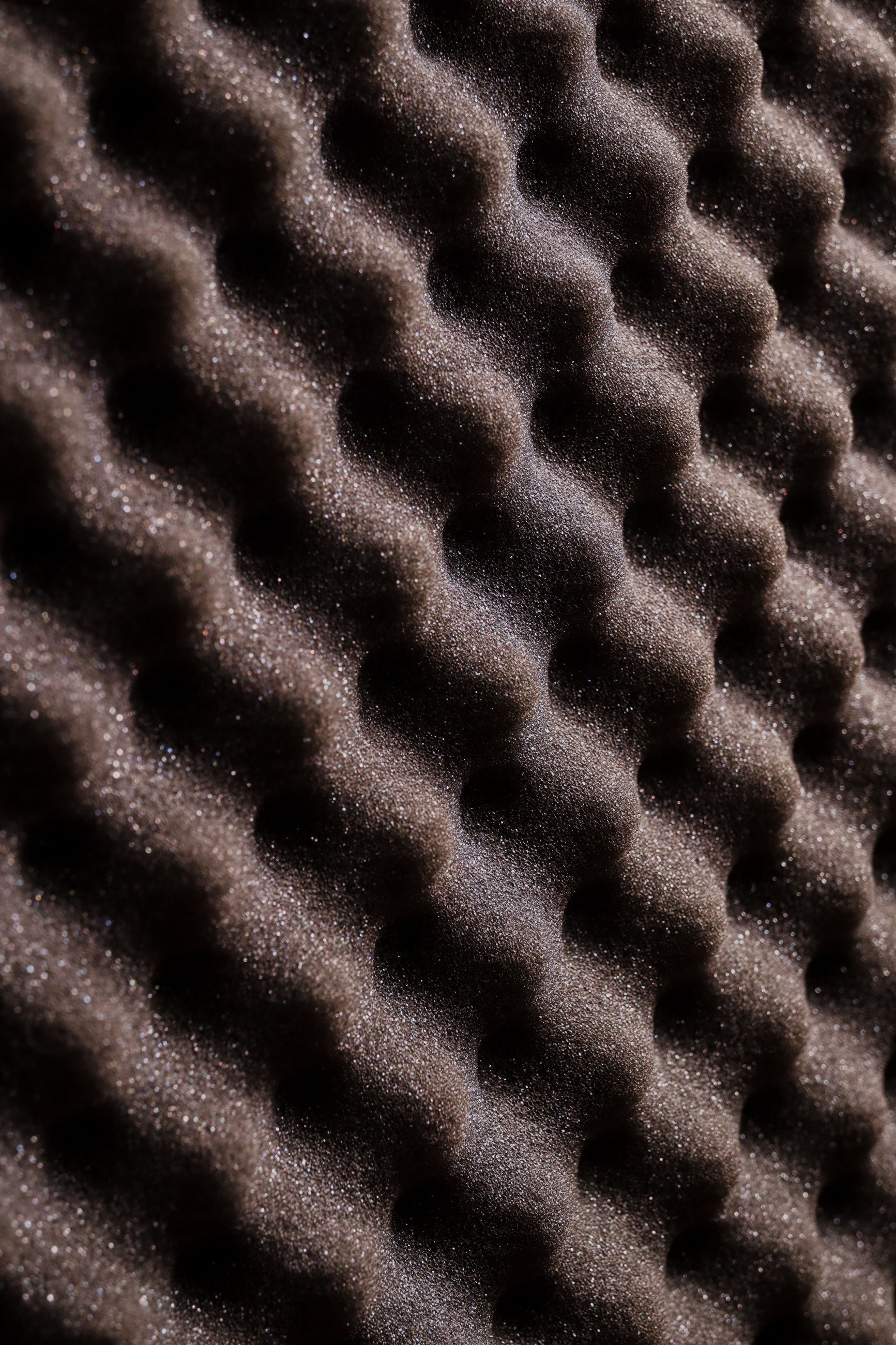
The bass region is decided first
Below 200 Hz is where almost all of the problem and almost all of the invisible cost lives. Bass traps, available volume and subwoofer placement are resolved before loudspeakers are chosen, never after.
Isolation is structure, not foam
Double walls, decoupling, mass, an acoustic door and flanking control. A door identical to the rest of the house is the classic mistake: it cancels the investment made in the walls and is always the last thing budgeted.
What we actually do
- Survey of proportions, room modes and pressure points
- Bass region controlled before the final speaker decision
- Double wall, decoupling, acoustic door and flanking transmission
- Performance targets committed in writing, not in adjectives
Rather talk?
A twenty-minute call saves three weeks on site
We reply within working days, with a person and not a form.
- Phone
- +351 253 578 161